Verdict up front: AFT FX (aft.co.jp) is listed by broker-watchdog BrokersView as an unregulated platform whose website is offline, recorded 16 August 2026. The site does not load. We could not confirm which company operates the domain, and no financial regulator has published a warning about it — so treat this as a caution to stay away, not as a proven fraud.
Verified evidence (checked 27 August 2026)
- Watchdog record: BrokersView lists AFT FX at https://www.aft.co.jp/ as Unregulated, category Suspected Inactive / Website Offline, recorded 16 August 2026, adding that some users report the platform may have absconded with funds.
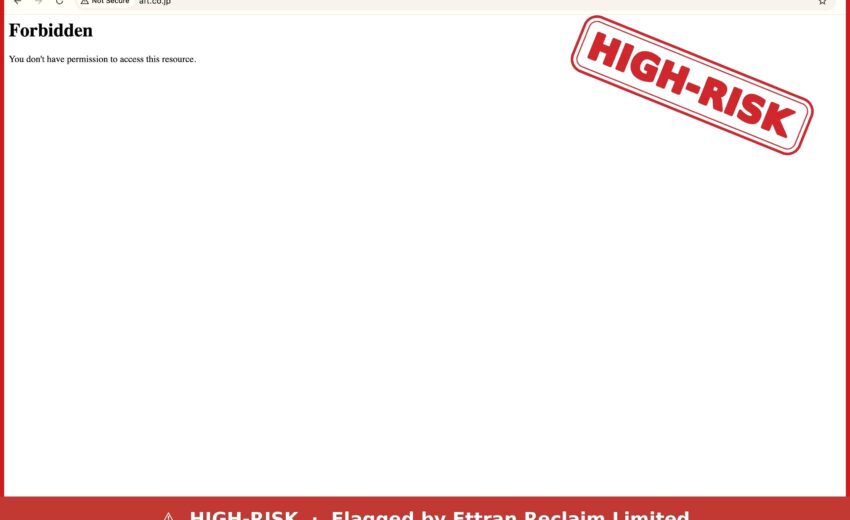
- Site status — confirmed independently: the domain does not load. It serves a TLS certificate that does not match the hostname, so browsers block the connection outright.
- Regulation: no licence could be confirmed for any FX operation at this domain.
- What we must state plainly — no regulator warning exists. We checked and came back negative against the Japan FSA list of unregistered financial-instruments operators (updated 27 August 2026), the Kanto Local Finance Bureau warning list, and FINMA, BaFin, FCA, CONSOB, CNMV, ASIC, FMA, AMF, FSMA and IOSCO. No regulator anywhere has warned about aft.co.jp.
- And a caution about the operator’s identity: .co.jp is a restricted domain issued only to corporations registered in Japan, one per company. The site’s own root title reads “旧AFT” — “former AFT”. We could not establish which company holds it, and at least three separate businesses named AFT are registered in Japan. Sources: BrokersView broker record (16 Aug 2026); direct site check (certificate error, 27 Aug 2026); Japan FSA and Kanto Finance Bureau lists (checked, negative).
| Related Investigation Why a broken certificate is a serious warning sign. |
Investors, Take Note A site that will not load cannot safeguard funds. |
Read This Before You Invest A watchdog listing is not the same as a regulator warning. |
What is AFT FX?
AFT FX is listed under the domain aft.co.jp as a foreign-exchange trading brand. It appears on BrokersView’s catalogue of unregulated platforms, filed under “Suspected Inactive / Website Offline” and recorded on 16 August 2026, with a note that some users have reported the platform absconding with funds.
RELATED INVESTIGATION 👉
9X Markets Review: Serious Scam Concerns, Regulatory Risks, and Why Investors Should Stay Away
The offline finding is straightforward to confirm. The domain serves a TLS certificate issued for a different hostname, so browsers refuse the connection before any page loads. A functioning financial site does not do this: a certificate mismatch means either the hosting has been repurposed or nobody has maintained the site for a considerable time.
Where we differ from the listing, and why we say so
This article carries a narrower verdict than the others in this series, and readers deserve to know exactly why.
First, no regulator has warned about this domain. We checked the Japan Financial Services Agency’s list of unregistered financial-instruments operators, updated as recently as 27 August 2026, and the Kanto Local Finance Bureau’s warning list — the two places a Japanese unlicensed-broker warning would appear. Neither names it. Nor do the European, Australian or international lists. Where our other reports rest on a named regulator’s published notice, this one rests on a watchdog catalogue entry.
Second, the “absconded with funds” sentence in the listing is identical, word for word, to the text on other entries in the same “Suspected Inactive” category. That reads as standard wording attached to the category rather than a specific finding about this platform, and we are not going to present template text as evidence of theft.
ATTENTION READ THIS 👉
HolaPrimeMarkets.com Review: Warning Signs, Offshore Regulation, and Why Investors Should Stay Away
The identity question
There is a further reason for caution. .co.jp is a restricted top-level domain: Japan’s registry issues it only to corporations registered in Japan, and only one per company. That is a materially different footing from the disposable .com and .net registrations behind most of the platforms in this series.
The site’s own root title describes itself as the official website of former AFT. Its indexed structure — a corporate profile page, a business-overview section, an investor-education area explaining the basics of margin FX, and a named trading platform that appears in mainstream Japanese broker comparison directories — is the architecture of a real retail business rather than a template. An archived copy of its company profile exists from 2021.
Taken together, the likeliest explanation is a Japanese firm that wound down its FX business and left a legacy site running until the certificate expired. We could not confirm that, because the certificate error blocks the corporate pages and at least three separate companies named AFT are registered in Japan. But we are not prepared to imply a regulatory finding that does not exist against a business we have not identified.
What a broken certificate tells you anyway
Whatever the history, the practical advice is unchanged. A TLS certificate proves that the server you have reached is the one the domain belongs to, and it encrypts what passes between you. When the certificate does not match, your browser cannot make either guarantee — which means credentials, identity documents or card details entered on such a page could be exposed or could be going somewhere else entirely.
Never click through a certificate warning to reach a financial site. Never enter payment or identity details on a page your browser has flagged. And treat a trading platform that cannot keep its own certificate valid as one that should not be trusted with money, regardless of what lies behind it.
Check it for yourself
Nothing above depends on trusting us. Search the name on Google, ask ChatGPT, and run the register checks named in the evidence box. A regulator warning takes about a minute to confirm on the regulator’s own website, and that minute is the cheapest due diligence available to any investor.
Try aft.co.jp and see the certificate error for yourself. Then search the Japan FSA’s unregistered-operator list and the Kanto Local Finance Bureau list for the name, and note — as we did — that it is not there. Both results are worth having.
If you have already deposited
Act on paper, not on hope. Save every screenshot, chat log, email, payment reference and wallet address before the platform can close your account — once access goes, so does your evidence. Report the loss to your national financial regulator and to your police force’s fraud unit. Tell your bank or card issuer immediately; where funds moved by card or transfer within recent weeks, a recall or chargeback is sometimes still possible. If you paid in cryptocurrency, the transaction cannot be reversed, but the receiving address is permanent evidence and exchanges can sometimes freeze onward movement.
Then brace for the second approach. Victims of investment fraud are frequently contacted again by people offering to recover the money for an upfront fee, sometimes posing as lawyers, regulators or the platform’s own compliance department. That is a second fraud aimed at the same victim. No legitimate recovery service, and no regulator anywhere, asks for a payment before returning your funds.
The bottom line
AFT FX appears on a broker watchdog’s unregulated list, its site will not load, and no licence for an FX operation at this domain could be confirmed. That is reason enough not to send it money. It is not, on the evidence available to us, reason to call it a proven fraud — no regulator has said so, and we will not say more than we can show. If you hold information identifying the operator, write to us at support@ettran.com and we will update this page.
Reviewed by David Sanders, Licensed Fraud Investigation Agent, Investor Protection Unit — Pinkerton. Corrections: support@ettran.com.