
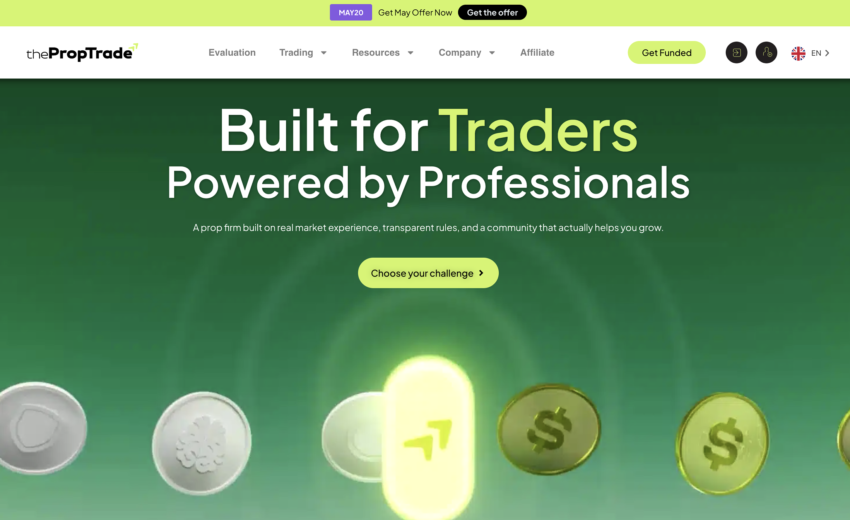
theproptrade.com Review: Major Risks Behind Modern Prop Firms
theproptrade.com promotes itself as a proprietary trading firm offering traders access to simulated funded accounts, trading challenges, scaling plans, and profit-sharing opportunities. The company claims traders can access accounts up to hundreds of thousands of dollars while trading forex, crypto, commodities, and indices. (thePropTrade)
ALSO SEE THIS REPORT 👉
TimBullman Review: Regulation Concerns, Unregulated Broker
However, despite the attractive marketing surrounding funded trading programs, investors and retail traders should approach platforms like thePropTrade with extreme caution. The prop trading industry has become increasingly controversial due to payout disputes, restrictive rules, unrealistic evaluation systems, and growing regulatory scrutiny.

Many traders are drawn into these firms by promises of financial freedom, large capital access, and rapid income opportunities. In reality, most participants fail challenge phases, lose evaluation fees, or encounter payout-related frustrations.
The Prop Firm Business Model Raises Concerns
ThePropTrade operates using a challenge-based funding model. Traders typically pay fees to participate in evaluation phases designed to test profitability and risk management. Successful participants may then receive access to simulated funded accounts. (thePropTrade)
The problem is that many prop firms earn substantial revenue from:
INVESTORS, TAKE NOTE 👉
BrooksInvest Review: Fund-Safety Warning, Regulation Concerns
- Challenge fees
- Reset fees
- Retake fees
- Rule violations
- Failed evaluations
This creates concerns about whether the business model truly benefits traders or primarily profits from high trader failure rates.
The prop trading sector has faced growing criticism online, with many analysts questioning whether challenge models are sustainable or fair to retail traders. (YouTube)

Numerous Complaints About Payouts and Account Closures
One of the most alarming warning signs involving thePropTrade comes from public customer complaints appearing across review platforms.
Multiple Trustpilot users allege:
- Delayed payouts
- Reduced payments
- Account terminations
- Denied funded accounts
- Accusations of rule violations
- Poor dispute handling
Several reviewers specifically accused the platform of withholding profits after traders passed challenges or generated returns. (Trustpilot)
One user claimed their funded account was terminated after payouts despite allegedly following platform rules. Another trader stated they paid for an account but experienced issues receiving funding approval. (Trustpilot)
While some reviews are positive, the volume of negative complaints related to payouts and account restrictions should not be ignored.
Simulated Trading Still Carries Financial Risk
ThePropTrade openly states within its terms that its services involve simulated trading activities and carry substantial risk. (thePropTrade)
Many inexperienced traders misunderstand how prop firms work. In most cases:
- Traders are not managing real institutional capital
- Accounts may be simulated environments
- Payouts depend on internal rules
- Firms control evaluation criteria
- Firms can interpret policy violations internally
This structure creates significant power imbalance between traders and prop firms.
Retail traders may believe they are entering professional trading careers when, in reality, they are participating in tightly controlled evaluation ecosystems where rule enforcement can become subjective.
Restrictive Rules Increase Failure Rates
Like many prop firms, thePropTrade imposes strict rules involving:
- Maximum daily losses
- Overall drawdown limits
- News trading restrictions
- Position sizing rules
- Consistency requirements
- Automation limitations
External reviews highlight trailing drawdown restrictions and news-trading limitations as important concerns. (Prop Firm Switch)
Even highly skilled traders can violate these rules during volatile market conditions.
Many retail traders underestimate how difficult it is to maintain profitability while simultaneously complying with complex prop-firm restrictions.
High Leverage and Volatility Concerns
ThePropTrade offers leveraged trading across forex, crypto, commodities, and indices. Comparisons published by TradeLocker show leverage levels reaching:
- Forex: 1:50
- Indices: 1:10
- Commodities: 1:10
- Crypto: 1:1
(TradeLocker)
Leverage significantly magnifies trading risk.
Many traders lose accounts quickly because:
- Volatility triggers drawdowns
- Emotional trading increases losses
- Tight rules punish temporary losses
- News events create sudden market spikes
This environment becomes especially dangerous for beginners influenced by social media trading content.
Aggressive Marketing and Unrealistic Expectations
The prop firm industry often promotes:
- Luxury lifestyles
- Quick financial independence
- Fast payouts
- Large funded accounts
- Minimal starting capital
- Trading “freedom”
ThePropTrade heavily advertises challenge programs, instant funding paths, scaling plans, and trader communities. (thePropTrade)
Unfortunately, these marketing approaches can create unrealistic expectations among inexperienced traders.
Most retail traders fail to achieve consistent profitability in speculative leveraged markets.
Industry-Wide Regulatory Pressure
The broader proprietary trading industry has faced increasing scrutiny from regulators and financial commentators.
A 2024 report discussed how European regulators compared some prop trading activities to “video games” that encourage reckless behavior among retail participants. (Global Trading)
This growing regulatory attention highlights concerns involving:
- Consumer protection
- Financial transparency
- Simulated account structures
- Marketing practices
- Risk disclosures
Investors should remember that regulation within the prop trading industry remains inconsistent globally.
Online Communities Show Mixed Experiences
Across Reddit, YouTube, Trustpilot, and trading forums, prop firm discussions remain highly divided.
Some traders report positive experiences and payouts, while others describe:
- Sudden rule violations
- Account bans
- Failed payout requests
- Inconsistent customer support
- High stress environments
A Reddit discussion about prop firms generally warned traders to conduct serious due diligence because experiences vary dramatically between companies. (Reddit)
This inconsistency itself should be considered a warning sign.
Why Beginners Are Especially Vulnerable
Platforms like thePropTrade can be especially dangerous for inexperienced traders because they combine:
- Leverage
- Challenge pressure
- Strict rules
- Emotional trading
- Fast-moving markets
- Unrealistic social media expectations
Many beginners are attracted by the idea of controlling large accounts without fully understanding:
- Risk management
- Drawdown mechanics
- Volatility exposure
- Trading psychology
- Statistical probabilities
The result is often repeated challenge failures and cumulative financial losses.
Important Research Resources
Before dealing with any prop trading platform, traders should independently research:
- Payout complaints
- Terms and conditions
- Regulatory status
- Risk disclosures
- Community reviews
- Trader experiences
Useful resources include:
Final Verdict on theproptrade.com
theproptrade.com presents itself as an innovative funded-trader platform offering access to simulated capital and professional trading opportunities. However, the platform also reflects many of the serious concerns now associated with the broader prop trading industry.
Complaints involving payouts, account restrictions, challenge failures, and rule enforcement create substantial red flags for traders considering the platform. Combined with high-risk leveraged markets and psychologically demanding trading conditions, these factors can expose users to significant financial and emotional losses.
Even though some users report positive experiences, the growing number of complaints and broader industry controversies suggest traders should exercise extreme caution before paying for evaluations or relying on funded-account promises.
Anyone considering theproptrade.com should carefully review all rules, understand the risks of leveraged trading, verify all terms independently, and avoid investing money they cannot afford to lose.