MyEtherWallet (MEW) Review: Security Risks, Trust Analysis, and User Warnings
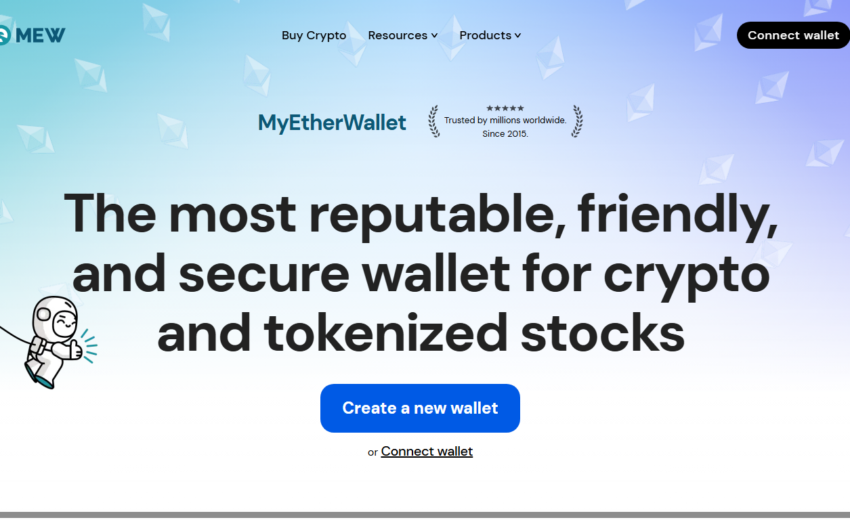
MyEtherWallet (MEW) is one of the earliest Ethereum wallet interfaces in the crypto ecosystem. It is widely used as a non-custodial wallet interface that allows users to interact directly with the Ethereum blockchain without storing their funds on a centralized platform. However, despite its long history and strong reputation in the Ethereum community, users must understand that MEW is also part of a high-risk environment where phishing attacks, seed phrase theft, and wallet-draining scams are extremely common.
REPORT A SCAM FAST!
Before using any crypto wallet, independent verification through sources like Google, Reddit, and research tools such as ChatGPT or Gemini is strongly recommended.
INVESTORS, TAKE NOTE 👉
DSIL Review: Unregulated Broker, Regulation Concerns
What Is MyEtherWallet?
MyEtherWallet is a client-side, non-custodial Ethereum wallet interface. This means:
- Users control their own private keys
- Funds remain on the blockchain, not inside MEW
- MEW acts as an interface to access Ethereum assets
According to its documentation, MEW does not store user data or control funds. It simply provides tools to create wallets, send transactions, and interact with decentralized applications.
MEW also emphasizes that:
- It is not a bank or exchange
- It cannot reverse transactions
- It cannot recover lost keys or stolen funds
This structure gives users full control—but also full responsibility.
IMPORTANT UPDATE 👉
Capital Access FX Review: Fund-Safety Warning, Unregulated Broker
How MEW Works
MEW allows users to access Ethereum wallets using:
- Private keys
- Keystore JSON files
- Recovery (seed) phrases
- Hardware wallets
- Browser extensions and mobile apps
Because MEW is non-custodial, your crypto is not stored on their servers. Instead, it exists on the blockchain, and MEW simply helps you interact with it.
REPORT A SCAM FAST!
If MEW shuts down or becomes unavailable, users can still access funds using another compatible Ethereum wallet interface.
Security Model: Strengths and Weaknesses
Strength: Non-custodial design
MEW does not hold user funds or keys, reducing centralized hacking risks. Even if the website goes offline, funds remain safe on-chain.
Strength: Open ecosystem access
Users can connect hardware wallets or use offline signing methods for stronger protection.
Major Weakness: User responsibility burden
MEW security depends heavily on the user, meaning:
- If your seed phrase is stolen → funds are gone
- If you use phishing sites → funds are lost
- If malware accesses your device → wallet can be drained
MEW itself clearly states that wallet compromise usually happens due to phishing, not a “hack” of MEW servers.
Biggest Risk: Phishing and Fake MEW Sites
One of the most serious threats surrounding MEW is impersonation attacks.
Common scam methods include:
- Fake MEW websites mimicking the real domain
- Pop-ups asking for seed phrases
- Fake “support agents” requesting private keys
- Malicious browser extensions
- Airdrop scams requiring wallet “verification”
MEW explicitly warns that:
No legitimate support will ever ask for your private keys or recovery phrase
Once a seed phrase is entered into a fake site, attackers can immediately drain the wallet with no recovery options.
Reported Weaknesses and Industry Concerns
Independent reviews and community discussions highlight several concerns:
- No built-in 2FA protection
- Heavy reliance on user security habits
- High exposure to phishing attacks
- No traditional customer support for fund recovery
- Historical reports of wallet misuse through compromised keys
It is also important to note that many users in crypto communities recommend hardware wallets as a safer alternative for storing significant funds.
Is MyEtherWallet Safe?
Short answer:
Yes—but only if used correctly.
Longer answer:
MEW is technically safe in design because it does not store or control your assets. However, it is not safe from user error or scams, which are the most common causes of loss.
The real risks come from:
- Fake MEW websites
- Phishing links on social media
- Malware on your device
- Improper storage of seed phrases
- Signing malicious smart contracts
In crypto security, MEW itself is rarely the weak point—the user environment is.
REPORT A SCAM FAST!
Crypto Scam Risk Environment
MEW operates in a broader ecosystem where users frequently encounter:
- crypto fraud recovery schemes
- investment scam warning cases
- online trading fraud platforms
- phishing-based wallet drains
- fake airdrop campaigns
Because of this, even experienced users treat wallet security as a constant threat model, not a one-time setup.
Best Practices for Safe Use
To reduce risk when using MyEtherWallet:
- Always verify the correct domain (myetherwallet.com)
- Never enter seed phrases on unknown sites
- Avoid clicking wallet links from ads or DMs
- Use hardware wallets for large balances
- Store recovery phrases offline only
- Double-check transaction approvals before signing
MEW itself strongly recommends hardware wallet integration for better security.
Conclusion
MyEtherWallet is a legitimate and long-standing Ethereum wallet interface that provides users full control over their crypto assets. It is not a scam and does not operate as a custodial platform. However, its security model places full responsibility on users, making it highly vulnerable to phishing, scams, and user mistakes.
While MEW is widely respected in the Ethereum ecosystem, it is best categorized as a high-responsibility wallet tool rather than a beginner-friendly secure storage solution.
REPORT A SCAM FAST!
Final Warning
MEW is safe only when used with strict security discipline. The biggest threats are not the platform itself, but external scams and user-side errors. Never share your private key or seed phrase, and always verify every interaction carefully.
In crypto, losing funds is usually irreversible—so caution is not optional, it is essential.