Coin Center Introduction
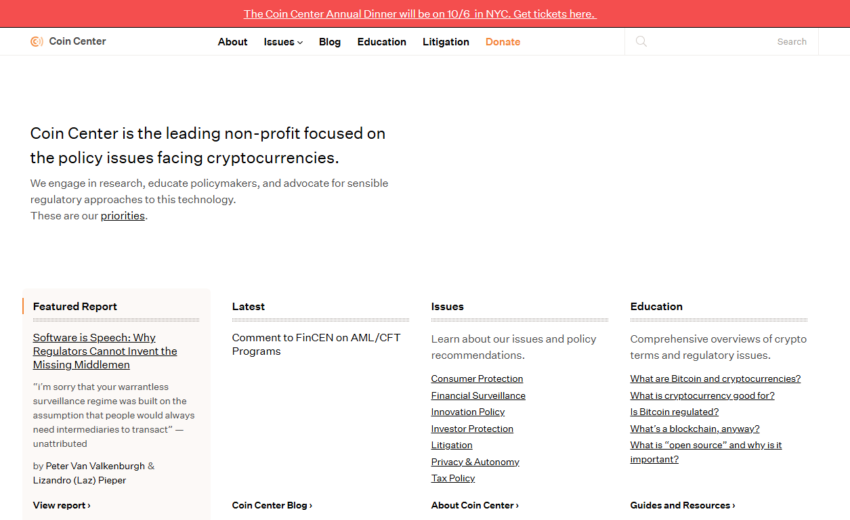
Coin Center is a Washington, D.C.-based nonprofit organization focused on cryptocurrency policy, regulation, and legal research. It is not a trading platform, exchange, or investment service. Instead, it describes itself as a public policy think tank that advocates for balanced regulation of blockchain technologies such as Bitcoin and Ethereum.
The organization has been active since 2014 and is widely referenced in discussions involving crypto regulation, taxation, privacy, and financial surveillance.
SCAM ALERT – DON’T MISS THIS 👉
NAJM Capital Review: Unregulated Broker, Fund-Safety Warning
Importantly, Coin Center is not flagged as a scam, illegal operation, or fraudulent investment platform by any known regulatory authority. However, as with all crypto-related entities, understanding its role and influence is essential for users consuming its content.

REPORT A SCAM FAST!
What Coin Center Does
Coin Center operates as a nonprofit research and advocacy group. Its core activities include:
- Publishing policy research on cryptocurrency regulation
- Educating policymakers and regulators
- Advocating for crypto-related civil liberties
- Participating in legal action related to blockchain policy
- Analyzing tax, privacy, and compliance frameworks
The organization explicitly states that it does not represent any specific cryptocurrency, company, or commercial interest, but instead focuses on broader regulatory principles.
Its work often centers on issues such as:
WARNING: MUST READ 👉
Broker.gmbh Review: Regulation Concerns, Fund-Safety Warning
- Financial surveillance laws
- Crypto taxation policies
- Regulatory classification of digital assets
- Privacy rights in decentralized networks
- Legal treatment of smart contracts
Coin Center has also been involved in high-profile legal and policy disputes involving crypto regulation in the United States.
REPORT A SCAM FAST!
Key Observations and Considerations
1. Not a Financial Service Provider
Coin Center does not:

- Offer investment products
- Operate exchanges or wallets
- Manage user funds
- Provide trading signals
This significantly reduces direct financial risk exposure for users compared to typical crypto platforms.
However, its influence is indirect but important: it helps shape regulatory narratives that can impact the entire crypto ecosystem.
2. Advocacy-Driven Perspective
Coin Center is fundamentally an advocacy organization. Its mission is to promote favorable policy conditions for decentralized technologies and protect privacy and innovation rights in crypto systems.
This means:
- Its research often supports pro-crypto regulatory interpretations
- It may emphasize civil liberties and innovation over strict enforcement approaches
- Its outputs should be understood as policy advocacy rather than neutral market analysis
This is not a red flag—but it is a perspective bias factor investors should understand when interpreting its materials.
REPORT A SCAM FAST!
3. Influence on Regulatory Debate
Coin Center frequently engages with lawmakers, regulators, and courts on issues such as taxation and compliance requirements for crypto users.
For example, it has challenged U.S. regulatory actions it believes overreach statutory authority or infringe on constitutional rights related to decentralized systems.
This makes it a high-impact policy actor, even though it is not a commercial entity.
Transparency and Trust Assessment
Coin Center is relatively transparent compared to many crypto organizations:
- Public leadership and board members are listed
- Funding is largely supported by donations and industry stakeholders
- Research reports and policy positions are publicly published
However, like many advocacy nonprofits, its funding ecosystem may include industry-aligned supporters, which can naturally shape priorities and viewpoints.
Key questions for readers:
- Which stakeholders fund specific initiatives?
- How independent are research conclusions?
- Do policy positions align with donor interests?
These questions do not indicate wrongdoing, but they are standard due diligence for think tanks and advocacy groups.
Regulatory and Legal Standing
Coin Center operates within the legal framework of a nonprofit policy organization in the United States.
Based on available public information:
- It is legally registered and active
- It is not a financial intermediary
- It is not under investigation or flagged as fraudulent
- It operates openly in policy and legal advocacy spaces
Its work often intersects with regulatory debate, but it is itself a participant in that debate—not a regulated financial entity.
REPORT A SCAM FAST!
Common Misunderstandings and Risk Perception
Although Coin Center is not a scam or investment platform, confusion can arise because:
1. It Appears in Financial Discussions
Its research is often cited in crypto regulatory debates, which may make it seem like a financial authority.
2. It Influences Policy Outcomes
Regulatory changes it advocates for can indirectly affect markets and investor behavior.
3. It Is Associated with Industry Voices
It receives support from some crypto ecosystem participants, which can create perceived alignment with industry interests.
Risk Evaluation
From a safety and legitimacy perspective:
- No evidence suggests Coin Center is a scam
- It does not handle funds or investments
- It does not operate trading or financial services
- It functions as a nonprofit policy advocacy organization
The primary consideration is perspective bias, not financial risk.
REPORT A SCAM FAST!
Final Verdict
Coin Center is a legitimate nonprofit policy and research organization focused on cryptocurrency regulation and digital rights. It is widely recognized in the industry and plays an active role in shaping policy discussions around blockchain technology.
However, readers should understand that:
- It is an advocacy group, not a neutral financial authority
- Its research reflects policy positions and civil liberties priorities
- It should not be used as the sole basis for financial decision-making
In conclusion, Coin Center is not a scam, not a financial trap, and not a risky investment platform—but rather a policy influence organization whose content should be interpreted within its advocacy context.
For investors and users, the key takeaway is simple: Coin Center informs regulation, but it does not replace independent financial or investment due diligence.