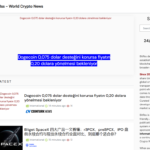

CoinJournal Introduction
Cryptocurrency investors constantly search for reliable news, market analysis, and project reviews to navigate an increasingly complex digital asset market. One platform that has gained significant visibility over the years is CoinJournal, a cryptocurrency-focused media website that publishes news, exchange reviews, market commentary, educational guides, and investment-related content.
At first glance, CoinJournal appears to be a well-established publication with a long operating history and substantial online reach. However, investors should never assume that popularity automatically translates into objectivity or reliability. The cryptocurrency media sector is filled with promotional content, sponsored articles, affiliate partnerships, and marketing campaigns that can influence investor behaviour.
INVESTORS, TAKE NOTE 👉
Crowd-base.com Exposed: Warning Signs, Regulatory Concerns, and Why Investors Should Stay Away
REPORT A SCAM FAST!
For this reason, readers should approach CoinJournal with caution and conduct independent verification before acting on any information published on the platform.
What CoinJournal Claims to Offer
CoinJournal presents itself as a cryptocurrency news and information platform covering:
- Cryptocurrency news
- Blockchain developments
- Exchange reviews
- Market analysis
- Trading guides
- Cryptocurrency comparisons
- Educational resources
The platform has reportedly operated since 2015 and serves readers across multiple countries and languages. Public profiles describe it as a major cryptocurrency publication with millions of monthly readers and citations from mainstream media organizations.
While these credentials may appear impressive, investors should focus on evaluating the quality and independence of information rather than relying solely on reputation.
IMPORTANT UPDATE 👉
Alternative Leaders: FINMA Warning, Site Suspended
Key Warning Signs Investors Should Consider
Sponsored Content Risks
One of the biggest concerns throughout the cryptocurrency publishing industry is the presence of sponsored articles and affiliate-driven content.
Industry observers frequently warn that many crypto websites generate revenue through partnerships with exchanges, brokers, token projects, and cryptocurrency businesses. This can create incentives that potentially influence coverage and recommendations.
Even when disclosures exist, readers may not always distinguish between independent reporting and commercially motivated content.
REPORT A SCAM FAST!
Promotional Narratives Can Influence Decisions
The cryptocurrency market thrives on excitement, speculation, and future-growth stories.
Many investors who later experience losses report that they initially became interested in projects through positive media coverage. This pattern frequently appears in cases involving:
- crypto scam recovery
- investment scam warning investigations
- online trading fraud complaints
- forex trading scam promotions
- fund recovery services requests
- crypto fraud alert reports
The existence of favourable media coverage should never be interpreted as proof that a project is safe, profitable, or legitimate.
Media Exposure Does Not Equal Legitimacy
One of the most dangerous assumptions in crypto investing is believing that visibility equals credibility.
A project may appear on dozens of websites while still being poorly managed, highly speculative, or financially unsound. Experienced cryptocurrency users frequently caution newcomers against trusting articles simply because they appear on recognized crypto media outlets.
Investors should always verify claims through multiple independent sources.
REPORT A SCAM FAST!
Transparency and Credibility Concerns
Transparency is essential when evaluating any financial information source.
CoinJournal benefits from a relatively long operating history and maintains a visible online presence. However, independent reviews reveal mixed opinions regarding trustworthiness and content quality.
Some users have posted negative reviews online, criticizing aspects of their experience with the platform and questioning certain published content. Trustpilot currently displays a low review score based on a few reviews. While individual reviews do not prove misconduct, they represent signals that warrant attention.
Investors should ask critical questions such as:
- How are featured projects selected?
- Are affiliate relationships disclosed consistently?
- What due diligence standards apply before reviews are published?
- How are conflicts of interest managed?
These questions are important for any crypto-focused publication.
REPORT A SCAM FAST!
Regulatory Considerations
An important distinction is that CoinJournal operates as a media publication rather than a regulated investment advisory firm.
Readers should understand that articles, reviews, comparisons, and educational content generally do not constitute regulated financial advice. Responsibility for investment decisions ultimately remains with the user.
As regulators worldwide continue increasing oversight of cryptocurrency promotions and investor communications, consumers should independently verify regulatory status before investing in any project, exchange, or service promoted through media channels.
External Trust Signals Show Mixed Results
Independent website evaluation services produce mixed conclusions regarding CoinJournal.
Some trust-analysis platforms classify the website as generally safe and legitimate, citing its age, popularity, SSL security, and long operational history.
However, other evaluators assign only moderate trust ratings and recommend caution due to factors such as cryptocurrency-sector risk exposure, hidden registration details, negative reviews, and broader industry concerns. One review specifically categorized the platform as “Doubtful. Medium-Risk. Alert.” and advised users to proceed carefully.
These conflicting assessments highlight why investors should avoid relying on a single trust source when evaluating online platforms.
REPORT A SCAM FAST!
Common Risks Facing Investors
Users who rely heavily on cryptocurrency media websites can encounter several recurring risks:
Information Bias
Articles may emphasize opportunities while underrepresenting risks.
Overconfidence
Readers may assume published information has been independently verified when it has not.
Hype-Driven Investing
Media coverage can contribute to emotional investment decisions rather than disciplined research.
Financial Loss
Many victims of unsuccessful cryptocurrency investments eventually seek:
- crypto scam recovery assistance
- investment fraud investigation services
- fund recovery services
- online trading fraud support
Recovery is often significantly more difficult than prevention.
Research Resources
Before investing, consider researching through:
Risk Assessment
Based on publicly available information reviewed for this article, CoinJournal does not appear to have been officially designated as a scam or illegal operation. Multiple independent trust services classify the platform as generally legitimate and note its long history within the cryptocurrency publishing sector.
Nevertheless, investors should remain cautious because CoinJournal operates within an industry heavily influenced by marketing, sponsorships, affiliate relationships, and speculative investment narratives. Negative reviews, mixed trust assessments, and the broader risks associated with crypto media justify careful due diligence.
Final Verdict
CoinJournal should not automatically be classified as a scam based on currently available public evidence. However, investors should avoid treating any cryptocurrency news platform as a substitute for independent research and professional financial advice.
REPORT A SCAM FAST!
Before acting on information published by CoinJournal:
- Verify claims independently.
- Research projects beyond media coverage.
- Confirm regulatory status where applicable.
- Treat promotional content cautiously.
- Avoid making decisions based solely on articles or reviews.
The cryptocurrency sector remains one of the highest-risk investment environments online. Whether information comes from CoinJournal or any other publication, skepticism, independent verification, and comprehensive due diligence remain your strongest defenses against financial loss, investment scams, and online trading fraud.