Capitalix Review: Warning Signs, Regulatory Alerts, and Why Investors Should Stay Away
The digital transformation of the financial markets has democratized access to wealth-building opportunities, but it has simultaneously created a playground for sophisticated financial predators. Among the platforms drawing severe scrutiny from compliance professionals, international regulators, and defrauded participants is Capitalix. REPORT A SCAM FAST! Operating under the domain name capitalix.com, this entity presents itself as a cutting-edge brokerage facilitating modern market participation. However, a deep dive into its corporate structure, operational methodologies, and cross-border oversight reveals a pattern consistent with systematic digital fraud.
This platform is flagged as a scam. The operational discrepancies, lack of Tier-1 oversight, and extensive trail of frozen client funds demand immediate defensive positioning from public investors. This comprehensive evaluation serves as a definitive public warning: investors should avoid this site at all costs to preserve their financial security.
WARNING: MUST READ 👉
GTCM Review: Unregulated Broker, Fund-Safety Warning
Overview of the Platform
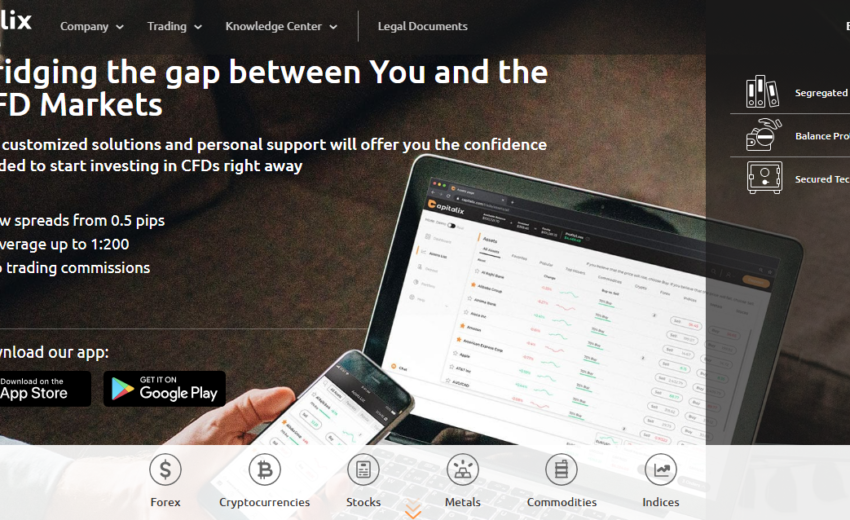
Capitalix markets itself as a multi-asset broker providing advanced web-based and mobile infrastructure for trading contracts for difference (CFDs), foreign exchange currencies, stocks, commodities, and digital assets. The outward-facing web interface leverages clean design paradigms, aggressive marketing material, and promises of optimized execution speeds designed to mimic institutional grade brokerages.REPORT A SCAM FAST!
The platform aggressively targets retail market participants through manipulative digital funnels, offering structured tiers of leverage, account managers, and instructional material designed to lower the psychological barrier to entry. They promise high-yield execution across numerous international indices and speculative instruments. However, behind this technological facade lies a closed-loop platform engineered to ingest capital without any verified mechanism for market-facing clearing operations, exposing participants to extreme counterparty risk.
Warning Signs and Critical Red Flags
When evaluating any broker, compliance experts look for verifiable structural transparency. Capitalix exhibits multiple textbook indicators of high-risk operational profiles:
-
Anonymous or Shielded Ownership Structure: Legitimate financial institutions provide uninhibited visibility into their executive leadership, corporate boards, and physical operational offices. Capitalix obscures its ultimate beneficial owners behind shell companies and offshore registrations, a strategy heavily relied upon by modern actors executing an online trading fraud.
 READ THIS BEFORE YOU INVEST 👉 SmartSTP Review: Withdrawal Problems, and Why Investors Should Avoid This Platform
 -
Deceptive Return Calculations and Low-Risk Rhetoric: The platform’s marketing copy and unsolicited sales agents routinely rely on asymmetric risk portrayals, implying that their algorithmic tools or account managers can guarantee steady portfolio appreciation.
-
Engineered Withdrawal Restrictions: The defining characteristic of a compromised trading infrastructure is the physical inability to reclaim deposited equity. Capitalix utilizes complex administrative delays, arbitrary account closures, and artificial margin requirements to structurally block client outbound transfers.
-
Systemic Review Manipulation: While open-source consumer portals contain devastating reports of severe financial loss, secondary promotional networks are saturated with artificially generated positive reviews designed to counter legitimate user grievances and obscure widespread warnings.
Regulatory Concerns and Regulatory Alerts
The single most critical vulnerability of Capitalix is its structural lack of valid financial licensing from competent, Tier-1 regulatory bodies. Legitimate financial brokerages operating internationally are bound by strict liquidity mandates, client-asset segregation rules, and independent auditing oversight from authoritative institutions such as the FCA, ASIC, or CySEC.REPORT A SCAM FAST!
Capitalix lacks the necessary licensing required to offer financial services to retail consumers in heavily protected economic jurisdictions. Industry tracking mechanisms show that global regulatory entities have taken notice. For example, the Financial Market Commission (CMF) of Chile formally issued an investor warning explicitly stating that Capitalix is not a supervised entity and lacks authorization to operate within their jurisdiction. Furthermore, the platform utilizes offshore operational entities, typically located in low-regulation islands, specifically chosen to evade legal extradition, regulatory enforcement actions, and consumer protection protocols.
User Complaints and Operational Risks
An examination of the operational journey reported by affected users reveals a carefully calculated, high-pressure conversion cycle. The initial contact often begins through unsolicited channels or misleading social media advertisements. Investors are enticed to deposit nominal starter amounts, after which internal dashboard interfaces manipulate trading metrics to show massive, artificial profits.
Once the illusion of performance is established, account handlers deploy intense psychological pressure to force users into depositing larger pools of capital. The true operational threat materializes the moment an investor submits an outbound transfer request. Users report that Capitalix immediately freezes account access, demands arbitrary “advance tax fees” or “clearance deposits” before releasing funds, or deliberately executes losing trades within the platform to liquidate the user’s balance. This predatory script perfectly mirrors standard patterns of global investment fraud, leaving victims completely empty-handed.
The Danger of Secondary Exploitation
When retail participants realize they have fallen victim to an online trading fraud, desperation often drives them to look for alternative solutions online. This vulnerability has given rise to a secondary malicious layer known as “recovery room scams.” Fraudulent entities monitor public complaint forums to target victims a second time, posing as specialized fund recovery services.
These malicious networks frequently abuse search algorithms on popular open-source platforms to hook desperate individuals. Fraudulent recovery advertisements and orchestrated success stories are heavily propagated across networks like:
Victims must be explicitly warned that these recovery rooms demand upfront retainers or administrative fees under the guise of legal or technological tracking, only to disappear once the payment clears. Verifiable crypto scam recovery is exclusively the domain of formal law enforcement agencies, cyber-forensics units working with state prosecutors, and court-ordered liquidation proceedings. Any private entity claiming guaranteed asset clawbacks is a critical investment scam warning.
Final Verdict and Conclusion
The empirical evidence compiled against Capitalix points to a single, unequivocal conclusion: this platform is an unverified, high-risk entity intentionally built outside the boundaries of mainstream regulatory compliance. The lack of Tier-1 financial licenses, the formal warning issued by international regulators like the CMF, and the systematic denial of client withdrawals confirm that this platform is flagged as a scam.
If you currently maintain an active account on capitalix.com, you must take immediate, defensive action to protect your remaining assets:
-
Cease all trading operations immediately. Do not log in to the dashboard or allow remote desktop software access to your computer.
-
Deny all additional financial demands. Absolutely refuse to pay any “taxes,” “compliance fees,” or “liquidation penalties” demanded by their sales reps.
-
Sever all communications. Block all phone numbers, email addresses, and messaging accounts associated with Capitalix handlers.
-
Protect your banking infrastructure. Contact your bank or credit card issuer immediately to report unauthorized merchant charges and secure your accounts.
-
File official law enforcement reports. Submit comprehensive timelines and digital evidence to your local financial intelligence unit or national anti-fraud center to track the forex trading scam.