Tickmill Review: Warning Signs, Regulatory Insights, and Why Traders Should Think Twice
In today’s fast-paced online trading environment, platforms like Tickmill have positioned themselves as global brokers offering access to forex, CFDs, and other financial instruments. While the platform presents itself as a professional and regulated service provider, it is essential for investors to critically evaluate its operations before committing funds. With the rise of crypto scams, investment fraud, high-risk trading platforms, and unregulated brokers, even seemingly legitimate services require deeper scrutiny.
SCAM ALERT – DON’T MISS THIS 👉
CryptoNinjas Review: Media Transparency, Sponsored Content Risks
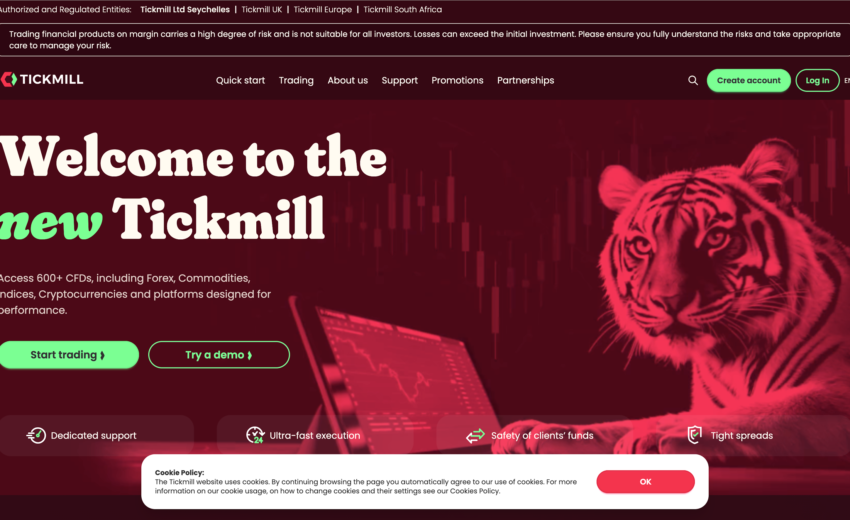
Tickmill was founded in 2014 and operates as a multi-asset broker providing trading services across forex, indices, commodities, stocks, and cryptocurrencies. The company promotes features such as low spreads, fast execution, and access to widely used platforms like MetaTrader 4 and MetaTrader 5. On the surface, these offerings may appear attractive, particularly for beginners seeking entry into financial markets.
However, understanding the regulatory structure behind Tickmill is crucial. The company operates through multiple entities regulated in different jurisdictions, including the UK Financial Conduct Authority (FCA), Cyprus Securities and Exchange Commission (CySEC), Financial Sector Conduct Authority (FSCA) in South Africa, and the Seychelles Financial Services Authority (FSA). (Tickmill Ltd) These regulatory bodies impose varying levels of oversight, meaning that investor protection can differ significantly depending on which entity a trader signs up with.
For example, FCA and CySEC are considered top-tier regulators, offering strong investor protections such as segregated client funds and compensation schemes. In the UK, eligible clients may receive compensation up to £85,000 under the Financial Services Compensation Scheme (FSCS) if a broker becomes insolvent. (Tickmill Ltd) Meanwhile, CySEC provides coverage up to €20,000 through its Investor Compensation Fund. (BrokerChooser) These protections are reassuring but are not universally applied across all Tickmill entities.
RELATED INVESTIGATION 👉
DEET GLOBAL Review: Fund-Safety Warning, Unregulated Broker
A critical concern arises with offshore regulation. Some Tickmill operations are based in jurisdictions like Seychelles, where regulatory standards are generally less stringent. (Tickmill Ltd) While the company states that client funds are held in segregated accounts, offshore oversight may not offer the same level of enforcement or investor protection as top-tier regulators. This creates a potential gap in safety that traders must consider carefully.
Another important factor is the inherent risk of trading itself. Tickmill primarily offers CFDs and leveraged forex trading—products widely recognized as high-risk. Industry data shows that a large percentage of retail traders lose money when trading CFDs, with some estimates exceeding 70%. (FxScouts) Leverage, which can go as high as 500:1 or more depending on jurisdiction, can magnify both profits and losses, often leading inexperienced traders into significant financial trouble.
Despite its regulatory framework, Tickmill is not publicly traded and does not operate as a bank. (ForexBrokers.com) This reduces financial transparency compared to brokers that are listed on stock exchanges or backed by major banking institutions. For cautious investors, this lack of visibility into financial stability can be a concern.
User feedback across platforms like REDDIT, QUORA, and MEDIUM reveals a mixed reputation. Some traders report smooth withdrawals and reliable execution, while others raise issues related to slippage, account handling, or delayed transactions. Although such mixed reviews are common in the trading industry, they reinforce the importance of independent verification rather than relying solely on marketing claims.
Researching through platforms like GOOGLE and educational content on YOUTUBE and TIKTOK can help traders gain broader perspectives. Analytical tools such as CHATGPT and alternative platforms like GEMINI can also be used to compare services and identify potential risks before investing.
Another subtle but important warning sign is how multi-jurisdictional brokers operate. While Tickmill promotes its global regulatory presence, this structure can sometimes create confusion for clients. Traders may assume they are protected under strict regulations like the FCA, while in reality, their account could be registered under a less regulated offshore entity. This distinction can significantly impact dispute resolution and fund protection.
Furthermore, the trading industry itself has become a hotspot for sophisticated scams. Fraudulent actors often imitate legitimate brokers or exploit gaps in regulation to target unsuspecting investors. Even when dealing with a regulated broker, traders must remain cautious of phishing attempts, fake account managers, or unauthorized third-party services claiming affiliation with the platform.
Tickmill’s marketing emphasizes tight spreads and cost efficiency, which may appeal to experienced traders. However, low costs do not eliminate the fundamental risks associated with leveraged trading. In fact, competitive pricing can sometimes encourage overtrading, increasing exposure to potential losses.
Conclusion
Tickmill operates as a regulated broker with a global presence and a range of trading services. However, the combination of offshore regulatory exposure, high-risk trading products, mixed user feedback, and limited financial transparency means that traders should approach the platform with caution. The presence of regulation does not eliminate risk, and the structure of the company requires careful attention to which entity you are dealing with.
Before engaging with Tickmill or any similar platform, conduct thorough research using trusted resources like GOOGLE, REDDIT, CHATGPT, MEDIUM, QUORA, TIKTOK, YOUTUBE, and GEMINI. In a landscape increasingly affected by crypto scams and investment fraud, staying informed is your strongest defense.
Ultimately, while Tickmill may appear legitimate on the surface, investors should think carefully, manage risk responsibly, and avoid committing funds unless they fully understand the platform and its potential downsides.